In the early dawn of the human story, religion was one of our very first attempts to make sense of the unknown. Before all the other “-ologies” showed up — biology, geology, meteorology — we had stories. Big, mysterious things happened, and we explained them the only way we knew how: with gods and spirits and sky boomie things.
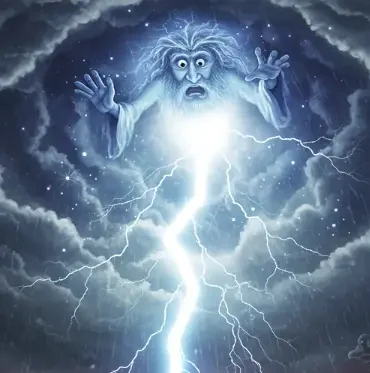
Take poor Urgh, for example. One day, Urgh gets zapped by a bolt of lightning and turns extra crispy. At first, it’s just a terrifying mystery — big light comes from the sky, Urgh goes sizzle. But somewhere along the way, someone decides that maybe Urgh didn’t just accidentally die. No, no. Urgh must have angered something, a sky god, probably. Maybe he broke some taboo. Maybe he forgot to dance the right dance or give up the best piece of meat. Whatever it was, he messed up, and that’s why he got smited.
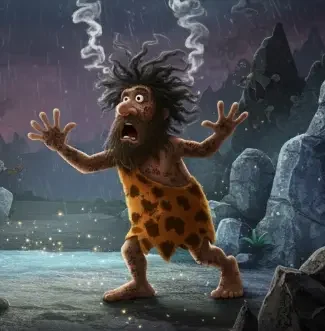
And who decides this? Probably the tribe’s proto-shaman, who just happens to think the rule Urgh broke is something everyone should stop doing. Suddenly, boom: divine punishment. Urgh didn’t follow the rules, not because they made sense, but because someone with spiritual clout said the gods cared about it.

From there, religion became more than explanation, it became regulation.
These gods and goddesses weren’t just characters in myth anymore; they became tools. Not sources of ethics or reasoned morality, but convenient enforcers of authority.
What do you mean you don’t want to go to war with those other people over the next valley? They’re heathens. Their god is probably planning to kill you right now. Better strike first, in the name of your own deity, of course.
And from there… well, it was all downhill.